Compare Prices To Find The Lowest Price



Description
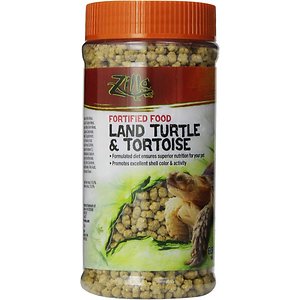
Keep your pet turtle or tortoise active and healthy with Zilla Land Turtle & Tortoise Food. It’s got everything he needs with protein, vitamins, and a scientifically formulated mineral blend that you couldn’t recreate with table scraps. With 40+ ingredients, these pellets ensure proper nutrition by matching the diet of flowers, berries, plants and insects enjoyed by wild land turtles.
Variety Score: 26 out of 100 Points
Brand Score: 90 out of 100 Points
Ingredients Score: 60 out of 100 Points
Total Score: 66 out of 100 Points
Key Benefits
- Land turtles & tortoises are primarily herbivores that consume plants, berries, flowers as well as some insects in the wild and this food is formulated with ingredients they need to promote excellent shell color and activity
- Can be mixed with vegetables and fruits or be fed as the primary diet
- Food may be moistened to increase palatability
- Store in a cool, dry place for maximum freshness
- Promotes vibrant shell coloration
Ingredients
Ground Corn, Ground Oats, Ground Wheat, Dehydrated Alfalfa Meal, Wheat Middlings, Fish Meal, Dehulled Soybean Meal, Corn Gluten Meal, Dicalcium Phosphate, Corn Oil, Dehydrated Alfalfa Leaves, Wheat Germ Meal, Brewers Dried Yeast, Dried Cane Molasses, L-Lysine, Calcium Carbonate, Salt, Dehydrated Raspberries, Dehydrated Strawberries, Vitamin A Supplement, Choline Chloride, Vitamin E Supplement, Dl-Methionine, Spirulina, Yucca Schidigera Extract, Propionic Acid (a Preservative), Vitamin B12 Supplement, Zinc Oxide, Ferrous Carbonate, Riboflavin Supplement, L-Ascorbyl-2-Polyphosphate (Source of Vitamin C), Ethoxyquin (a Preservative), Manganous Oxide, Niacin, Menadione Sodium Bisulfite Complex (Source of Vitamin K Activity), Calcium Pantothenate, Copper Oxide, Cholecalciferol (Source of Vitamin D3), Beta Carotene, Pyridoxine Hydrochloride, Thiamine Mononitrate, Cobalt Carbonate, Folic Acid, Calcium Iodate, Biotin, Sodium Selenite, Artificial Color, Natural Flavor.See products with the same ingredients:
-
Artificial Color (1)
-
Beta carotene (16)
β-Carotene is an organic, strongly colored red-orange pigment abundant in plants and fruits. It is a member of the carotenes, which are terpenoids, synthesized biochemically from eight isoprene units and thus having 40 carbons. Among the carotenes, β-carotene is distinguished by having beta-rings at both ends of the molecule.
-
Biotin - Harmless ingredient
(242)
Biotin also called vitamin H, vitamin B7 or vitamin B8 is a water-soluble B vitamin. It is involved in a wide range of metabolic processes, both in humans and in other organisms, primarily related to the utilization of fats, carbohydrates, and amino acids.
-
Brewers Dried Yeast (36)
-
Calcium Carbonate - Harmless ingredient
(155)
Calcium carbonate is a chemical compound with the formula CaCO3. It is a common substance found in rocks as the minerals calcite and aragonite and is the main component of pearls and the shells of marine organisms, snails, and eggs.
-
Calcium Iodate - Controversial ingredient
(126)
-
Calcium Pantothenate - Controversial ingredient
(135)
-
Choline Chloride - Harmless ingredient
(236)
Choline chloride is an organic compound with the formula 3NCH2CH2OH]Cl. It is bifunctional, containing both quaternary ammonium salt and an alcohol. The cation is choline, which occurs naturally. It is a white, water-soluble salt used mainly in animal feed..
-
Cobalt Carbonate (12)
Cobalt carbonate is the inorganic compound with the formula CoCO3. This reddish paramagnetic solid is an intermediate in the hydrometallurgical purification of cobalt from its ores. It is an inorganic pigment, and a precursor to catalysts. Cobalt carbonate also occurs as the rare red/pink mineral spherocobaltite..
-
Copper Oxide (2)
-
Corn Gluten Meal - Controversial ingredient
(49)
-
Corn Oil (2)
Corn oil is oil extracted from the germ of corn. Its main use is in cooking, where its high smoke point makes refined corn oil a valuable frying oil. It is also a key ingredient in some margarines. Corn oil is generally less expensive than most other types of vegetable oils.
-
Dehulled Soybean Meal (10)
-
Dehydrated Alfalfa Leaves (1)
-
Dehydrated Alfalfa Meal (14)
-
Dehydrated Raspberries (1)
-
Dehydrated Strawberries (1)
-
Dicalcium Phosphate - Harmful ingredient
(68)
-
Dl-Methionine - Healthy ingredient
(62)
Methionine is an essential amino acid in humans. As the substrate for other amino acids such as cysteine and taurine, versatile compounds such as SAM-e, and the important antioxidant glutathione, methionine plays a critical role in the metabolism and health of many species, including humans.
-
Dried Cane Molasses (3)
-
Ethoxyquin (11)
Ethoxyquin is a quinoline-based antioxidant used as a food preservative in certain countries and originally to control scald on pears after harvest. It is used as a preservative in some pet foods to slow the development of rancidity of fats.
-
Ferrous Carbonate (2)
-
Fish Meal (22)
Fish meal, or fishmeal, is a commercial product mostly made from fish that are not used for human consumption; fishmeal is generally used to feed farm animals in agricultural setting. Because it is calorically dense and cheap to produce, fishmeal has played a critical role in the growth of factory farms and the number of farm animals it is possible to breed and feed.
-
Folic Acid - Harmless ingredient
(235)
Folate, also known as vitamin B9 and folacin, is one of the B vitamins. Manufactured folic acid, which is converted into folate by the body, is used as a dietary supplement and in food fortification as it is more stable during processing and storage.
-
Ground Corn (10)
-
Ground Oats (5)
-
Ground Wheat (12)
-
L-Lysine (23)
Lysine is an α-amino acid that is used in the biosynthesis of proteins. It contains an α-amino group, an α-carboxylic acid group, and a side chain lysyl 4NH2), classifying it as a basic, charged, aliphatic amino acid.
-
Manganous Oxide - Low-quality ingredient
(49)
-
Natural Flavor - Controversial ingredient
(106)
-
Niacin - Harmless ingredient
(238)
Niacin, also known as nicotinic acid, is an organic compound and a form of vitamin B3, an essential human nutrient. It has the formula C 6H 5NO 2 and belongs to the group of the pyridinecarboxylic acid. Niacin is obtained in the diet from a variety of whole and processed foods, with highest contents in fortified packaged foods, tuna, salmon, some vegetable and other animal sources.
-
Propionic Acid (9)
Propionic acid is a naturally occurring carboxylic acid with chemical formula CH3CH2CO2H. It is a liquid with a pungent and unpleasant smell somewhat resembling body odor. The anion CH3CH2CO2− as well as the salts and esters of propionic acid are known as propionates or propanoates..
-
Pyridoxine Hydrochloride - Harmless ingredient
(238)
-
Riboflavin - Harmless ingredient
(244)
Riboflavin, also known as vitamin B2, is a vitamin found in food and used as a dietary supplement. Food sources include eggs, green vegetables, milk and other dairy product, meat, mushrooms, and almonds. Some countries require its addition to grains. As a supplement it is used to prevent and treat riboflavin deficiency and prevent migraines.
-
Salt - Harmless ingredient
(231)
Salt is a mineral consisting primarily of sodium chloride, a chemical compound belonging to the larger class of salts; salt in its natural form as a crystalline mineral is known as rock salt or halite. Salt is present in vast quantities in seawater, where it is the main mineral constituent.
-
Sodium Selenite - Harmful ingredient
(166)
-
Spirulina (4)
Spirulina may refer to:.
-
Thiamine Mononitrate - Harmless ingredient
(256)
-
Vitamin A - Harmless ingredient
(215)
Vitamin A is a group of unsaturated nutritional organic compounds that includes retinol, retinal, retinoic acid, and several provitamin A carotenoids. Vitamin A has multiple functions: it is important for growth and development, for the maintenance of the immune system, and for good vision.
-
Vitamin B12 - Harmless ingredient
(257)
Vitamin B12, also known as cobalamin, is a water-soluble vitamin involved in the metabolism of every cell of the human body: it is a cofactor in DNA synthesis, and in both fatty acid and amino acid metabolism. It is particularly important in the normal functioning of the nervous system via its role in the synthesis of myelin, and in the maturation of developing red blood cells in the bone marrow.
-
Vitamin C - Harmless ingredient
(60)
Vitamin C, also known as ascorbic acid and ascorbate, is a vitamin found in various foods and sold as a dietary supplement. It is used to prevent and treat scurvy. Vitamin C is an essential nutrient involved in the repair of tissue and the enzymatic production of certain neurotransmitters.
-
Vitamin D3 - Harmless ingredient
(244)
Cholecalciferol, also known as vitamin D3 and colecalciferol, is a type of vitamin D which is made by the skin when exposed to sunlight; it is also found in some foods and can be taken as a dietary supplement. It is used to treat and prevent vitamin D deficiency and associated diseases, including rickets.
-
Vitamin E - Harmless ingredient
(283)
Vitamin E is a group of eight fat soluble compounds that include four tocopherols and four tocotrienols. Vitamin E deficiency, which is rare and usually due to an underlying problem with digesting dietary fat rather than from a diet low in vitamin E, can cause nerve problems.
-
Vitamin K Activity (35)
-
Wheat Germ Meal (4)
-
Wheat Middlings (6)
-
Yucca Schidigera Extract - Harmless ingredient
(41)
-
Zinc Oxide - Harmful ingredient
(65)
Zinc oxide is an inorganic compound with the formula ZnO. ZnO is a white powder that is insoluble in water, and it is widely used as an additive in numerous materials and products including rubbers, plastics, ceramics, glass, cement, lubricants, paints, ointments, adhesives, sealants, pigments, foods, batteries, ferrites, fire retardants, and first-aid tapes.
Guaranteed Analysis
| Crude Protein | 14.0% min |
|---|---|
| Crude Fat | 4.0% min |
| Crude Fiber | 10.0% max |
| Moisture | 12.0% max |
Dry Matter Basis
| Crude Protein | 15.9% |
|---|---|
| Crude Fat | 4.5% |
| Crude Fiber | 11.4% |
| Moisture | 13.6% |