Compare Prices To Find The Lowest Price


Description
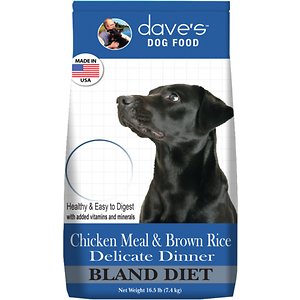
For those dogs with sensitive stomachs, Dave’s Pet Food Chicken Meal & Brown Rice Delicate Dinner provides a healthy option. This dry food contains easily-digestible ingredients that are high in fiber to help maintain a healthy digestive system. Oligofructose is also included, as it feeds good bacteria in the intestines of your pup. No wheat or wheat gluten, artificial flavors or colors, beef, corn, soy, or dairy products are in this recipe – your dog is getting nothing but the best ingredients.
Price Score: 65 out of 100 Points
Variety Score: 71 out of 100 Points
Brand Score: 82 out of 100 Points
Ingredients Score: 63 out of 100 Points
Total Score: 75.2 out of 100 Points
Key Benefits
- High-quality ingredients because nothing is too good for your pup.
- Contains no beef or dairy products.
- Wheat-free diet for those dogs with sensitivities.
- Oligofructose feeds good bacteria in the intestines to help maintain a healthy digestive system.
- Designed to help dogs with ‘delicate’ stomachs that can’t tolerate most foods.
Ingredients
Chicken Meal, Brown Rice, Oat Groats, Sorghum, Millet, Dried Potatoes, Chicken Fat (Preserved With Mixed Tocopherols), Spray Dried Egg Product, Dried Plain Beet Pulp, Natural Flavor, Flax Seed, Salt, Potassium Chloride, Dicalcium Phosphate, Dl Methionine, Calcium Carbonate, L-Lysine, Fructooligosaccharides, Dried Lactobacillus Acidophilus Fermentation Extract, Dried Kelp, Vitamin E Supplement, Ascorbic Acid, Vegetable Oil, Biotin, Niacin Supplement, D-Calcium Panto-Thenate, Vitamin A Acetate, Riboflavin, Vitamin B12 Supplement, Thiamine Mononitrate, Pyridoxine Hydrochloride, Citric Acid, Vitamin D3 Supple-Ment, Folic Acid, Ferrous Sulfate, Zinc Sulfate, Zinc Proteinate, Iron Proteinate, Copper Proteinate, Manganous Oxide, Sodium Selenite, Calcium Iodate Caloric Content New Formulation: 366 kcal/cupSee products with the same ingredients:
-
Ascorbic Acid - Harmless ingredient
(50)
Vitamin C, also known as ascorbic acid and ascorbate, is a vitamin found in various foods and sold as a dietary supplement. It is used to prevent and treat scurvy. Vitamin C is an essential nutrient involved in the repair of tissue and the enzymatic production of certain neurotransmitters.
-
Biotin - Harmless ingredient
(242)
Biotin also called vitamin H, vitamin B7 or vitamin B8 is a water-soluble B vitamin. It is involved in a wide range of metabolic processes, both in humans and in other organisms, primarily related to the utilization of fats, carbohydrates, and amino acids.
-
Brown Rice (22)
Brown rice is a whole-grain rice with the inedible outer hull removed. This is as compared with white rice, which is the same grain, also with hull removed, but also with the bran layer and cereal germ removed. Red rice, gold rice, and black rice are all whole rices, but with differently pigmented outer layers.
-
Calcium Carbonate - Harmless ingredient
(155)
Calcium carbonate is a chemical compound with the formula CaCO3. It is a common substance found in rocks as the minerals calcite and aragonite and is the main component of pearls and the shells of marine organisms, snails, and eggs.
-
Chicken Fat - Healthy ingredient
(71)
Chicken fat is fat obtained from chicken rendering and processing. Of the many animal-sourced substances, chicken fat is noted for being high in linoleic acid, an omega-6 fatty acid. Linoleic acid levels are between 17.9% and 22.8%. It is a common flavoring, additive or main component of chicken soup.
-
Chicken Meal - Healthy ingredient
(55)
-
Citric Acid - Controversial ingredient
(61)
Citric acid is a weak organic acid that has the chemical formula C 6H 8O 7. It occurs naturally in citrus fruits. In biochemistry, it is an intermediate in the citric acid cycle, which occurs in the metabolism of all aerobic organisms.
-
Copper Proteinate - Controversial ingredient
(89)
-
D-Calcium Panto-Thenate (1)
-
Dicalcium Phosphate - Harmful ingredient
(68)
-
Dl-Methionine - Healthy ingredient
(62)
Methionine is an essential amino acid in humans. As the substrate for other amino acids such as cysteine and taurine, versatile compounds such as SAM-e, and the important antioxidant glutathione, methionine plays a critical role in the metabolism and health of many species, including humans.
-
Dried Kelp - Healthy ingredient
(43)
-
Dried Lactobacillus Acidophilus Fermentation Extract (1)
-
Dried Plain Beet Pulp (20)
-
Dried Potatoes (7)
-
Ferrous Sulfate - Harmless ingredient
(166)
Iron sulfate sulphate) or ferrous sulfate denotes a range of salts with the formula FeSO4·xH2O. These compounds exist most commonly as the heptahydrate but are known for several values of x. The hydrated form is used medically to treat iron deficiency, and also for industrial applications.
-
Flax Seed (8)
-
Folic Acid - Harmless ingredient
(235)
Folate, also known as vitamin B9 and folacin, is one of the B vitamins. Manufactured folic acid, which is converted into folate by the body, is used as a dietary supplement and in food fortification as it is more stable during processing and storage.
-
Fructooligosaccharides (12)
Fructooligosaccharides also sometimes called oligofructose or oligofructan, are oligosaccharide fructans, used as an alternative sweetener. FOS exhibits sweetness levels between 30 and 50 percent of sugar in commercially prepared syrups.[unreliable source?] It occurs naturally, and its commercial use emerged in the 1980s in response to consumer demand for healthier and calorie-reduced foods..
-
Iron Proteinate - Controversial ingredient
(68)
-
L-Lysine (23)
Lysine is an α-amino acid that is used in the biosynthesis of proteins. It contains an α-amino group, an α-carboxylic acid group, and a side chain lysyl 4NH2), classifying it as a basic, charged, aliphatic amino acid.
-
Manganous Oxide - Low-quality ingredient
(49)
-
Millet (1)
Millets are a group of highly variable small-seeded grasses, widely grown around the world as cereal crops or grains for fodder and human food. Millets are important crops in the semiarid tropics of Asia and Africa, with 97% of millet production in developing countries.
-
Natural Flavor - Controversial ingredient
(106)
-
Niacin - Harmless ingredient
(238)
Niacin, also known as nicotinic acid, is an organic compound and a form of vitamin B3, an essential human nutrient. It has the formula C 6H 5NO 2 and belongs to the group of the pyridinecarboxylic acid. Niacin is obtained in the diet from a variety of whole and processed foods, with highest contents in fortified packaged foods, tuna, salmon, some vegetable and other animal sources.
-
Oat Groats (10)
-
Potassium Chloride - Low-quality ingredient
(208)
Potassium chloride is a metal halide salt composed of potassium and chlorine. It is odorless and has a white or colorless vitreous crystal appearance. The solid dissolves readily in water, and its solutions have a salt-like taste. KCl is used as a fertilizer, in medicine, in scientific applications, and in food processing, where it may be known as E number additive E508.
-
Pyridoxine Hydrochloride - Harmless ingredient
(238)
-
Riboflavin - Harmless ingredient
(244)
Riboflavin, also known as vitamin B2, is a vitamin found in food and used as a dietary supplement. Food sources include eggs, green vegetables, milk and other dairy product, meat, mushrooms, and almonds. Some countries require its addition to grains. As a supplement it is used to prevent and treat riboflavin deficiency and prevent migraines.
-
Salt - Harmless ingredient
(231)
Salt is a mineral consisting primarily of sodium chloride, a chemical compound belonging to the larger class of salts; salt in its natural form as a crystalline mineral is known as rock salt or halite. Salt is present in vast quantities in seawater, where it is the main mineral constituent.
-
Sodium Selenite - Harmful ingredient
(166)
-
Sorghum (1)
Sorghum is a genus of flowering plants in the grass family Poaceae. Seventeen of the 25 species are native to Australia, with the range of some extending to Africa, Asia, Mesoamerica, and certain islands in the Indian and Pacific Oceans. One species is grown for grain, while many others are used as fodder plants, either cultivated in warm climates worldwide or naturalized in pasture lands.
-
Spray Dried Egg Product (1)
-
Thiamine Mononitrate - Harmless ingredient
(256)
-
Vegetable Oil (25)
Vegetable oils, or vegetable fats, are oils extracted from seeds, or less often, from other parts of fruits. Like animal fats, vegetable fats are mixtures of triglycerides. Soybean oil, rapeseed oil, and cocoa butter are examples of fats from seeds. Olive oil, palm oil, and rice bran oil are examples of fats from other parts of fruits.
-
Vitamin A Acetate (33)
-
Vitamin B12 - Harmless ingredient
(257)
Vitamin B12, also known as cobalamin, is a water-soluble vitamin involved in the metabolism of every cell of the human body: it is a cofactor in DNA synthesis, and in both fatty acid and amino acid metabolism. It is particularly important in the normal functioning of the nervous system via its role in the synthesis of myelin, and in the maturation of developing red blood cells in the bone marrow.
-
Vitamin D3 - Harmless ingredient
(244)
Cholecalciferol, also known as vitamin D3 and colecalciferol, is a type of vitamin D which is made by the skin when exposed to sunlight; it is also found in some foods and can be taken as a dietary supplement. It is used to treat and prevent vitamin D deficiency and associated diseases, including rickets.
-
Vitamin E - Harmless ingredient
(283)
Vitamin E is a group of eight fat soluble compounds that include four tocopherols and four tocotrienols. Vitamin E deficiency, which is rare and usually due to an underlying problem with digesting dietary fat rather than from a diet low in vitamin E, can cause nerve problems.
-
Zinc Proteinate - Controversial ingredient
(79)
-
Zinc Sulfate - Low-quality ingredient
(132)
Zinc sulfate is an inorganic compound and dietary supplement. As a supplement it is used to treat zinc deficiency and to prevent the condition in those at high risk. Side effects of excess supplementation may include abdominal pain, vomiting, headache, and tiredness.
Guaranteed Analysis
| Crude Protein | 25.0% min |
|---|---|
| Crude Fat | 10.0% min |
| Crude Fiber | 3.0% max |
| Moisture | 10.0% max |
| Phosphorus | 0.89% min |
| Calcium | 1.24% min |
Dry Matter Basis
| Crude Protein | 27.8% |
|---|---|
| Crude Fat | 11.1% |
| Crude Fiber | 3.3% |
| Moisture | 11.1% |