Compare Prices To Find The Lowest Price




Description
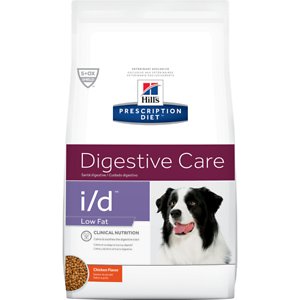
Inappropriate levels of fat in the blood, inability to digest protein, or lack of digestive enzymes can affect your dog’s digestive health. Efficient digestion is essential for your dog to be able to build and repair tissues and obtain energy, and for these reasons, it is important to feed a food that is formulated to help support digestive health. For many dogs experiencing digestive challenges, it’s also very important to feed a food with a low-fat level. Hill’s nutritionists and veterinarians developed Prescription Diet i/d Low Fat clinical nutrition especially formulated to support your dog’s digestive health. In fact, i/d Low Fat is clinically proven nutrition to calm & soothe the digestive tract. Plus, with the S+OXSHIELD seal of confidence, the Digestive Care formula meets specific nutrient standards shown to promote a urinary environment that helps reduce the risk of struvite and calcium oxalate crystals.
Price Score: 59 out of 100 Points
Variety Score: 100 out of 100 Points
Brand Score: 91 out of 100 Points
Ingredients Score: 59 out of 100 Points
Total Score: 80.8 out of 100 Points
Key Benefits
- Helps address inappropriate levels of fat in the blood, inability to digest protein, or lack of digestive enzymes that can affect your dog's digestive health.
- Promotes healthy and efficient digestion and ensures easy nutrient absorption so your dog can build and repair tissues and obtain energy.
- Promotes beneficial microflora, reduces the risk of urinary stone formation and supports a healthy immune system.
- Highly digestible with prebiotic fiber and ginger, plus high levels of omega-3 fatty acids, controlled minerals and clinically proven antioxidants.
- Digestive Care recipe has not changed—it offers the same great taste and benefits as it did prior to the introduction of the S+OXSHIELD seal of confidence.
Ingredients
Brewers Rice, Corn Starch, Corn Gluten Meal, Whole Grain Wheat, Chicken By-Product Meal, Flaxseed, Cracked Pearled Barley, Whole Grain Oats, Dried Beet Pulp, Chicken Liver Flavor, Pork Flavor, Lactic Acid, Ginger, Soybean Oil, Dicalcium Phosphate, Potassium Citrate, Pork Fat, Potassium Chloride, Iodized Salt, Choline Chloride, L-Lysine, vitamins (Vitamin E Supplement, L-Ascorbyl-2-Polyphosphate (source of Vitamin C), Niacin Supplement, Thiamine Mononitrate, Vitamin A Supplement, Calcium Pantothenate, Vitamin B12 Supplement, Pyridoxine Hydrochloride, Riboflavin Supplement, Biotin, Folic Acid, Vitamin D3 Supplement), Calcium Carbonate, Taurine, minerals (Ferrous Sulfate, Zinc Oxide, Copper Sulfate, Manganous Oxide, Calcium Iodate, Sodium Selenite), L-Carnitine, Mixed Tocopherols for freshness, Natural Flavors, Beta-Carotene. Caloric Content 333 kcal/cupSee products with the same ingredients:
-
Biotin - Harmless ingredient
(242)
Biotin also called vitamin H, vitamin B7 or vitamin B8 is a water-soluble B vitamin. It is involved in a wide range of metabolic processes, both in humans and in other organisms, primarily related to the utilization of fats, carbohydrates, and amino acids.
-
Brewers Rice (36)
-
Calcium Carbonate - Harmless ingredient
(155)
Calcium carbonate is a chemical compound with the formula CaCO3. It is a common substance found in rocks as the minerals calcite and aragonite and is the main component of pearls and the shells of marine organisms, snails, and eggs.
-
Calcium Iodate - Controversial ingredient
(126)
-
Calcium Pantothenate - Controversial ingredient
(135)
-
Chicken By-Product Meal (25)
-
Chicken Liver Flavor (14)
-
Choline Chloride - Harmless ingredient
(236)
Choline chloride is an organic compound with the formula 3NCH2CH2OH]Cl. It is bifunctional, containing both quaternary ammonium salt and an alcohol. The cation is choline, which occurs naturally. It is a white, water-soluble salt used mainly in animal feed..
-
Copper Sulfate - Harmless ingredient
(159)
Copper sulfate, also known as copper sulphate, are the inorganic compounds with the chemical formula CuSO4x, where x can range from 0 to 5. The pentahydrate is the most common form. Older names for this compound include blue vitriol, bluestone, vitriol of copper, and Roman vitriol.
-
Corn Gluten Meal - Controversial ingredient
(49)
-
Corn Starch (21)
Corn starch or maize starch is the starch derived from the corn grain. The starch is obtained from the endosperm of the kernel. Corn starch is a common food ingredient, used in thickening sauces or soups, and in making corn syrup and other sugars.
-
Cracked Pearled Barley (4)
-
Dicalcium Phosphate - Harmful ingredient
(68)
-
Dried Beet Pulp (21)
-
Ferrous Sulfate - Harmless ingredient
(166)
Iron sulfate sulphate) or ferrous sulfate denotes a range of salts with the formula FeSO4·xH2O. These compounds exist most commonly as the heptahydrate but are known for several values of x. The hydrated form is used medically to treat iron deficiency, and also for industrial applications.
-
Flaxseed - Healthy ingredient
(47)
Flax, also known as common flax or linseed, is a member of the genus Linum in the family Linaceae. It is a food and fiber crop cultivated in cooler regions of the world. Textiles made from flax are known in the Western countries as linen, and traditionally used for bed sheets, underclothes, and table linen.
-
Folic Acid - Harmless ingredient
(235)
Folate, also known as vitamin B9 and folacin, is one of the B vitamins. Manufactured folic acid, which is converted into folate by the body, is used as a dietary supplement and in food fortification as it is more stable during processing and storage.
-
Ginger (7)
Ginger is a flowering plant whose rhizome, ginger root or ginger, is widely used as a spice and a folk medicine. It is a herbaceous perennial which grows annual pseudostems about one meter tall bearing narrow leaf blades. The inflorescences bear pale yellow with purple flowers and arise directly from the rhizome on separate shoots.
-
Iodized Salt (11)
Iodised salt is table salt mixed with a minute amount of various salts of the element iodine. The ingestion of iodine prevents iodine deficiency. Worldwide, iodine deficiency affects about two billion people and is the leading preventable cause of intellectual and developmental disabilities.
-
L-Carnitine (27)
Carnitine is a quaternary ammonium compound involved in metabolism in most mammals, plants, and some bacteria. Carnitine exists as one of two stereoisomers. Both are biologically active but only l-carnitine naturally occurs in animals and d-carnitine is toxic as it inhibits the activity of the l-form.
-
L-Lysine (23)
Lysine is an α-amino acid that is used in the biosynthesis of proteins. It contains an α-amino group, an α-carboxylic acid group, and a side chain lysyl 4NH2), classifying it as a basic, charged, aliphatic amino acid.
-
Lactic Acid (12)
Lactic acid is an organic acid. It has a molecular formula CH3CHCOOH. It is white in solid state and it is miscible with water. While in liquid state it is a colorless solution. Production includes both artificial synthesis as well as natural sources.
-
Manganous Oxide - Low-quality ingredient
(49)
-
Mixed Tocopherols - Low-quality ingredient
(83)
-
Natural Flavors - Controversial ingredient
(38)
Flavor, flavour, or taste is the perceptual impression of food or other substances, and is determined primarily by the chemical senses of the gustatory and olfactory system. The "trigeminal senses", which detect chemical irritants in the mouth and throat, as well as temperature and texture, are also important to the overall gestalt of flavor perception.
-
Niacin - Harmless ingredient
(238)
Niacin, also known as nicotinic acid, is an organic compound and a form of vitamin B3, an essential human nutrient. It has the formula C 6H 5NO 2 and belongs to the group of the pyridinecarboxylic acid. Niacin is obtained in the diet from a variety of whole and processed foods, with highest contents in fortified packaged foods, tuna, salmon, some vegetable and other animal sources.
-
Pork Fat (6)
-
Pork Flavor (4)
-
Potassium Chloride - Low-quality ingredient
(208)
Potassium chloride is a metal halide salt composed of potassium and chlorine. It is odorless and has a white or colorless vitreous crystal appearance. The solid dissolves readily in water, and its solutions have a salt-like taste. KCl is used as a fertilizer, in medicine, in scientific applications, and in food processing, where it may be known as E number additive E508.
-
Potassium Citrate (13)
-
Pyridoxine Hydrochloride - Harmless ingredient
(238)
-
Riboflavin - Harmless ingredient
(244)
Riboflavin, also known as vitamin B2, is a vitamin found in food and used as a dietary supplement. Food sources include eggs, green vegetables, milk and other dairy product, meat, mushrooms, and almonds. Some countries require its addition to grains. As a supplement it is used to prevent and treat riboflavin deficiency and prevent migraines.
-
Sodium Selenite - Harmful ingredient
(166)
-
Soybean Oil (29)
-
Taurine - Healthy ingredient
(151)
Taurine, or 2-aminoethanesulfonic acid, is an organic compound that is widely distributed in animal tissues. It is a major constituent of bile and can be found in the large intestine, and accounts for up to 0.1% of total human body weight.
-
Thiamine Mononitrate - Harmless ingredient
(256)
-
Vitamin A - Harmless ingredient
(215)
Vitamin A is a group of unsaturated nutritional organic compounds that includes retinol, retinal, retinoic acid, and several provitamin A carotenoids. Vitamin A has multiple functions: it is important for growth and development, for the maintenance of the immune system, and for good vision.
-
Vitamin B12 - Harmless ingredient
(257)
Vitamin B12, also known as cobalamin, is a water-soluble vitamin involved in the metabolism of every cell of the human body: it is a cofactor in DNA synthesis, and in both fatty acid and amino acid metabolism. It is particularly important in the normal functioning of the nervous system via its role in the synthesis of myelin, and in the maturation of developing red blood cells in the bone marrow.
-
Vitamin C - Harmless ingredient
(60)
Vitamin C, also known as ascorbic acid and ascorbate, is a vitamin found in various foods and sold as a dietary supplement. It is used to prevent and treat scurvy. Vitamin C is an essential nutrient involved in the repair of tissue and the enzymatic production of certain neurotransmitters.
-
Vitamin D3 - Harmless ingredient
(244)
Cholecalciferol, also known as vitamin D3 and colecalciferol, is a type of vitamin D which is made by the skin when exposed to sunlight; it is also found in some foods and can be taken as a dietary supplement. It is used to treat and prevent vitamin D deficiency and associated diseases, including rickets.
-
Vitamin E - Harmless ingredient
(283)
Vitamin E is a group of eight fat soluble compounds that include four tocopherols and four tocotrienols. Vitamin E deficiency, which is rare and usually due to an underlying problem with digesting dietary fat rather than from a diet low in vitamin E, can cause nerve problems.
-
Whole Grain Oats (4)
-
Whole Grain Wheat (8)
-
Zinc Oxide - Harmful ingredient
(65)
Zinc oxide is an inorganic compound with the formula ZnO. ZnO is a white powder that is insoluble in water, and it is widely used as an additive in numerous materials and products including rubbers, plastics, ceramics, glass, cement, lubricants, paints, ointments, adhesives, sealants, pigments, foods, batteries, ferrites, fire retardants, and first-aid tapes.
Guaranteed Analysis
| Crude Protein | 20.0% min |
|---|---|
| Crude Fat | 9.0% max |
| Crude Fiber | 5.0% max |
| Calcium | 0.8% max |
| Phosphorus | 0.75% max |
| Omega-3 Fatty Acids | 0.6% min |