Compare Prices To Find The Lowest Price



Description
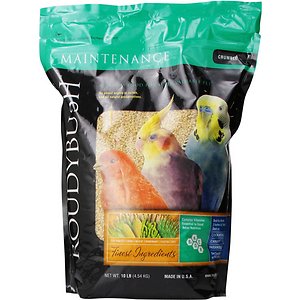
Roudybush Daily Maintenance Bird Food Crumble is scientifically formulated for the care of healthy adult birds. All natural, high-quality ingredients work together to build a diet specifically formulated with the nutrition your bird requires. This comprehensive formula doesn’t have any artificial colors, flavors or animal by-products and doesn’t require any additional vitamin or mineral supplements for a complete meal. This recipe is a great diet to feed pet birds year-round and for off-season breeding birds.
Price Score: 70 out of 100 Points
Variety Score: 71 out of 100 Points
Brand Score: 91 out of 100 Points
Ingredients Score: 63 out of 100 Points
Total Score: 77 out of 100 Points
Key Benefits
- Developed with all-natural and high-quality ingredients and made without added sugars, colors, flavors or animal by-products.
- 100% edible means all nutrition and no waste for easier clean-up and a healthier diet.
- This complete diet means no additional vitamin or mineral supplements are needed.
- Intended for adult birds that are not laying eggs or feeding chicks.
- Ideal for birds 3 inches and taller such as Cockatiels, Quakers, Lovebirds, Budgerigars (Parakeets), Conures, Ringecks, Parrotlets, Canaries and Neophemas.
Ingredients
Ground Corn, Ground Wheat, Soybean Meal, Soybean Oil, Alfalfa, Calcium Carbonate, Dicalcium Phosphate, Salt, L-Lysine, DL-Methionine, L-Arginine, Niacin, Silicon Dioxide (Anti-Caking Aid), Citric Acid (Preservative), Mixed Tocopherols (Preservative), Vegetable Oil, Rosemary Extract, Alpha Tocopherol Acetate (Source Of Vitamin E), Ascorbic Acid, Manganese Sulfate, Yucca Schidigera Extract, Dried Yeast, Biotin, Calcium Pantothenate, Zinc Oxide, Riboflavin, Pyridoxine Hydrochloride, Vitamin A Acetate, Thiamine Mononitrate, Potassium Iodide, Vitamin D3 Supplement, Folic Acid, Vitamin B12 Supplement, Sodium Selenite, Propionic Acid (Preservative), Ammonium Hydroxide, Acetic Acid, Sorbic Acid (Preservative), Tartaric Acid, And Natural Apple FlavoringSee products with the same ingredients:
-
Acetic Acid - Harmless ingredient
(3)
Acetic acid, systematically named ethanoic acid, is a colourless liquid organic compound with the chemical formula CH3COOH. When undiluted, it is sometimes called glacial acetic acid. Vinegar is no less than 4% acetic acid by volume, making acetic acid the main component of vinegar apart from water.
-
Alfalfa (4)
Alfalfa, also called lucerne and called Medicago sativa in binomial nomenclature, is a perennial flowering plant in the legume family Fabaceae. It is cultivated as an important forage crop in many countries around the world. It is used for grazing, hay, and silage, as well as a green manure and cover crop.
-
Ammonium Hydroxide (3)
Ammonium hydroxide, also known as ammonia water, ammonia solution, ammoniacal liquor, ammonia liquor, aqua ammonia, aqueous ammonia, or ammonia, is a solution of ammonia in water. It can be denoted by the symbols NH3. Although the name ammonium hydroxide suggests an alkali with composition [NH4+][OH−], it is actually impossible to isolate samples of NH4OH.
-
And Natural Apple Flavoring (2)
-
Ascorbic Acid - Harmless ingredient
(50)
Vitamin C, also known as ascorbic acid and ascorbate, is a vitamin found in various foods and sold as a dietary supplement. It is used to prevent and treat scurvy. Vitamin C is an essential nutrient involved in the repair of tissue and the enzymatic production of certain neurotransmitters.
-
Biotin - Harmless ingredient
(242)
Biotin also called vitamin H, vitamin B7 or vitamin B8 is a water-soluble B vitamin. It is involved in a wide range of metabolic processes, both in humans and in other organisms, primarily related to the utilization of fats, carbohydrates, and amino acids.
-
Calcium Carbonate - Harmless ingredient
(155)
Calcium carbonate is a chemical compound with the formula CaCO3. It is a common substance found in rocks as the minerals calcite and aragonite and is the main component of pearls and the shells of marine organisms, snails, and eggs.
-
Calcium Pantothenate - Controversial ingredient
(135)
-
Citric Acid - Controversial ingredient
(61)
Citric acid is a weak organic acid that has the chemical formula C 6H 8O 7. It occurs naturally in citrus fruits. In biochemistry, it is an intermediate in the citric acid cycle, which occurs in the metabolism of all aerobic organisms.
-
Dicalcium Phosphate - Harmful ingredient
(68)
-
Dl-Methionine - Healthy ingredient
(62)
Methionine is an essential amino acid in humans. As the substrate for other amino acids such as cysteine and taurine, versatile compounds such as SAM-e, and the important antioxidant glutathione, methionine plays a critical role in the metabolism and health of many species, including humans.
-
Dried Yeast (20)
-
Folic Acid - Harmless ingredient
(235)
Folate, also known as vitamin B9 and folacin, is one of the B vitamins. Manufactured folic acid, which is converted into folate by the body, is used as a dietary supplement and in food fortification as it is more stable during processing and storage.
-
Ground Corn (10)
-
Ground Wheat (12)
-
L-Arginine (9)
Arginine, also known as l-arginine, is an α-amino acid that is used in the biosynthesis of proteins. It contains an α-amino group, an α-carboxylic acid group, and a side chain consisting of a 3-carbon aliphatic straight chain ending in a guanidino group.
-
L-Lysine (23)
Lysine is an α-amino acid that is used in the biosynthesis of proteins. It contains an α-amino group, an α-carboxylic acid group, and a side chain lysyl 4NH2), classifying it as a basic, charged, aliphatic amino acid.
-
Manganese Sulfate - Controversial ingredient
(138)
-
Mixed Tocopherols - Low-quality ingredient
(83)
-
Niacin - Harmless ingredient
(238)
Niacin, also known as nicotinic acid, is an organic compound and a form of vitamin B3, an essential human nutrient. It has the formula C 6H 5NO 2 and belongs to the group of the pyridinecarboxylic acid. Niacin is obtained in the diet from a variety of whole and processed foods, with highest contents in fortified packaged foods, tuna, salmon, some vegetable and other animal sources.
-
Potassium Iodide - Harmless ingredient
(85)
Potassium iodide is a chemical compound, medication, and dietary supplement. As a medication it is used to treat hyperthyroidism, in radiation emergencies, and to protect the thyroid gland when certain types of radiopharmaceuticals are used. In the developing world it is also used to treat skin sporotrichosis and phycomycosis.
-
Propionic Acid (9)
Propionic acid is a naturally occurring carboxylic acid with chemical formula CH3CH2CO2H. It is a liquid with a pungent and unpleasant smell somewhat resembling body odor. The anion CH3CH2CO2− as well as the salts and esters of propionic acid are known as propionates or propanoates..
-
Pyridoxine Hydrochloride - Harmless ingredient
(238)
-
Riboflavin - Harmless ingredient
(244)
Riboflavin, also known as vitamin B2, is a vitamin found in food and used as a dietary supplement. Food sources include eggs, green vegetables, milk and other dairy product, meat, mushrooms, and almonds. Some countries require its addition to grains. As a supplement it is used to prevent and treat riboflavin deficiency and prevent migraines.
-
Rosemary Extract - Healthy ingredient
(50)
-
Salt - Harmless ingredient
(231)
Salt is a mineral consisting primarily of sodium chloride, a chemical compound belonging to the larger class of salts; salt in its natural form as a crystalline mineral is known as rock salt or halite. Salt is present in vast quantities in seawater, where it is the main mineral constituent.
-
Silicon Dioxide (16)
Silicon dioxide, also known as silica, is an oxide of silicon with the chemical formula SiO2, most commonly found in nature as quartz and in various living organisms. In many parts of the world, silica is the major constituent of sand.
-
Sodium Selenite - Harmful ingredient
(166)
-
Sorbic Acid (21)
Sorbic acid, or 2,4-hexadienoic acid, is a natural organic compound used as a food preservative. It has the chemical formula CH34CO2H. It is a colourless solid that is slightly soluble in water and sublimes readily. It was first isolated from the unripe berries of the Sorbus aucuparia, hence its name..
-
Soybean Meal (22)
-
Soybean Oil (29)
-
Tartaric Acid (3)
Tartaric acid is a white, crystalline organic acid that occurs naturally in many fruits, most notably in grapes, but also in bananas, tamarinds, and citrus. Its salt, potassium bitartrate, commonly known as cream of tartar, develops naturally in the process of winemaking.
-
Thiamine Mononitrate - Harmless ingredient
(256)
-
Vegetable Oil (25)
Vegetable oils, or vegetable fats, are oils extracted from seeds, or less often, from other parts of fruits. Like animal fats, vegetable fats are mixtures of triglycerides. Soybean oil, rapeseed oil, and cocoa butter are examples of fats from seeds. Olive oil, palm oil, and rice bran oil are examples of fats from other parts of fruits.
-
Vitamin A Acetate (33)
-
Vitamin B12 - Harmless ingredient
(257)
Vitamin B12, also known as cobalamin, is a water-soluble vitamin involved in the metabolism of every cell of the human body: it is a cofactor in DNA synthesis, and in both fatty acid and amino acid metabolism. It is particularly important in the normal functioning of the nervous system via its role in the synthesis of myelin, and in the maturation of developing red blood cells in the bone marrow.
-
Vitamin D3 - Harmless ingredient
(244)
Cholecalciferol, also known as vitamin D3 and colecalciferol, is a type of vitamin D which is made by the skin when exposed to sunlight; it is also found in some foods and can be taken as a dietary supplement. It is used to treat and prevent vitamin D deficiency and associated diseases, including rickets.
-
Vitamin E - Harmless ingredient
(283)
Vitamin E is a group of eight fat soluble compounds that include four tocopherols and four tocotrienols. Vitamin E deficiency, which is rare and usually due to an underlying problem with digesting dietary fat rather than from a diet low in vitamin E, can cause nerve problems.
-
Yucca Schidigera Extract - Harmless ingredient
(41)
-
Zinc Oxide - Harmful ingredient
(65)
Zinc oxide is an inorganic compound with the formula ZnO. ZnO is a white powder that is insoluble in water, and it is widely used as an additive in numerous materials and products including rubbers, plastics, ceramics, glass, cement, lubricants, paints, ointments, adhesives, sealants, pigments, foods, batteries, ferrites, fire retardants, and first-aid tapes.
Guaranteed Analysis
| Crude Protein | 11.0% min |
|---|---|
| Crude Fat | 6.0% min |
| Crude Fiber | 3.5% max |
| Moisture | 12.0% max |
Dry Matter Basis
| Crude Protein | 12.5% |
|---|---|
| Crude Fat | 6.8% |
| Crude Fiber | 4.0% |
| Moisture | 13.6% |