Compare Prices To Find The Lowest Price



Description
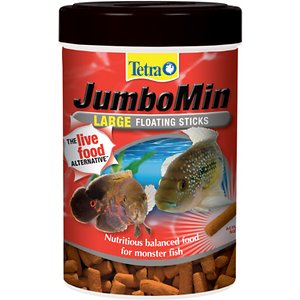
Give your monster fish the nutrition they need without the messiness of live food with Tetra Cichlid Jumbo Sticks Fish Food. Monster fish including oscars, green terrors, Dempseys, piranhas, lionfish, angels and groupers are carnivores and their diet consists primarily of live food in the wild. Tetra Cichlid Jumbo Sticks Fish Food is made of dried krill and shrimp and is an excellent alternative to feeding live. Fortified with vitamin C and other nutrients, Tetra Cichlid Jumbo Sticks Fish Food contain natural attractants and carotenoids to promote color development and they float to encourage natural foraging.
Price Score: 58 out of 100 Points
Variety Score: 60 out of 100 Points
Brand Score: 75 out of 100 Points
Ingredients Score: 65 out of 100 Points
Total Score: 64.6 out of 100 Points
Key Benefits
- Great alternative to feeding live
- Made with dried krill and shrimp
- Fortified with vitamin C
- With natural color enhancers
- Enhanced with vitamin C and the patented, health-enhancing ProCare blend from TetraMin
Ingredients
Shrimp Meal, Wheat Gluten, Wheat Starch, Krill, Fish Meal, Dried Yeast, Soybean Oil, Monobasic Calcium Phosphate, Algae Meal, Yeast Extract, Ascorbic Acid, Inositol, Niacin, A-Tocopherol Acetate, D-Calcium Pantothenate, L-Ascorbyl 2 Polyphosphate, Riboflavin 5 Phosphate, Thiamine Mononitrate, Pyridozine Hydrochloride, Vitamin A Palmitate, Menadione Sodium Bisulfaite Complex, Folic Acid, Biotin, Vitamin B12 Supplement, Cholecalciferol, Manganese Sulfate, Zinc Sulfate, Ferrous Sulfate, Cobalt AcetateSee products with the same ingredients:
-
A-Tocopherol Acetate (5)
-
Algae Meal (9)
-
Ascorbic Acid - Harmless ingredient
(50)
Vitamin C, also known as ascorbic acid and ascorbate, is a vitamin found in various foods and sold as a dietary supplement. It is used to prevent and treat scurvy. Vitamin C is an essential nutrient involved in the repair of tissue and the enzymatic production of certain neurotransmitters.
-
Biotin - Harmless ingredient
(242)
Biotin also called vitamin H, vitamin B7 or vitamin B8 is a water-soluble B vitamin. It is involved in a wide range of metabolic processes, both in humans and in other organisms, primarily related to the utilization of fats, carbohydrates, and amino acids.
-
Cholecalciferol (5)
Cholecalciferol, also known as vitamin D3 and colecalciferol, is a type of vitamin D which is made by the skin when exposed to sunlight; it is also found in some foods and can be taken as a dietary supplement. It is used to treat and prevent vitamin D deficiency and associated diseases, including rickets.
-
Cobalt Acetate (3)
-
D-Calcium Pantothenate - Controversial ingredient
(110)
-
Dried Yeast (20)
-
Ferrous Sulfate - Harmless ingredient
(166)
Iron sulfate sulphate) or ferrous sulfate denotes a range of salts with the formula FeSO4·xH2O. These compounds exist most commonly as the heptahydrate but are known for several values of x. The hydrated form is used medically to treat iron deficiency, and also for industrial applications.
-
Fish Meal (22)
Fish meal, or fishmeal, is a commercial product mostly made from fish that are not used for human consumption; fishmeal is generally used to feed farm animals in agricultural setting. Because it is calorically dense and cheap to produce, fishmeal has played a critical role in the growth of factory farms and the number of farm animals it is possible to breed and feed.
-
Folic Acid - Harmless ingredient
(235)
Folate, also known as vitamin B9 and folacin, is one of the B vitamins. Manufactured folic acid, which is converted into folate by the body, is used as a dietary supplement and in food fortification as it is more stable during processing and storage.
-
Inositol (34)
Inositol, or more precisely myo-inositol, is a carbocyclic sugar that is abundant in brain and other mammalian tissues, mediates cell signal transduction in response to a variety of hormones, neurotransmitters and growth factors and participates in osmoregulation. It is a sugar alcohol with half the sweetness of sucrose.
-
Krill (2)
Krill are small crustaceans of the order Euphausiacea, and are found in all the world's oceans. The name "krill" comes from the Norwegian word krill, meaning "small fry of fish", which is also often attributed to species of fish. Krill are considered an important trophic level connection – near the bottom of the food chain – because they feed on phytoplankton and zooplankton, converting these into a form suitable for many larger animals for which krill make up the largest part of their diets.
-
L-Ascorbyl (5)
-
Manganese Sulfate - Controversial ingredient
(138)
-
Menadione Sodium Bisulfaite Complex (1)
-
Monobasic Calcium Phosphate (6)
-
Niacin - Harmless ingredient
(238)
Niacin, also known as nicotinic acid, is an organic compound and a form of vitamin B3, an essential human nutrient. It has the formula C 6H 5NO 2 and belongs to the group of the pyridinecarboxylic acid. Niacin is obtained in the diet from a variety of whole and processed foods, with highest contents in fortified packaged foods, tuna, salmon, some vegetable and other animal sources.
-
Pyridozine Hydrochloride (1)
-
Riboflavin - Harmless ingredient
(244)
Riboflavin, also known as vitamin B2, is a vitamin found in food and used as a dietary supplement. Food sources include eggs, green vegetables, milk and other dairy product, meat, mushrooms, and almonds. Some countries require its addition to grains. As a supplement it is used to prevent and treat riboflavin deficiency and prevent migraines.
-
Shrimp Meal (9)
-
Soybean Oil (29)
-
Thiamine Mononitrate - Harmless ingredient
(256)
-
Vitamin A Palmitate (8)
-
Vitamin B12 - Harmless ingredient
(257)
Vitamin B12, also known as cobalamin, is a water-soluble vitamin involved in the metabolism of every cell of the human body: it is a cofactor in DNA synthesis, and in both fatty acid and amino acid metabolism. It is particularly important in the normal functioning of the nervous system via its role in the synthesis of myelin, and in the maturation of developing red blood cells in the bone marrow.
-
Wheat Gluten - Controversial ingredient
(46)
-
Wheat Starch (5)
-
Yeast Extract (16)
Yeast extracts consist of the cell contents of yeast without the cell walls; they are used as food additives or flavorings, or as nutrients for bacterial culture media. They are often used to create savory flavors and umami taste sensations, and can be found in a large variety of packaged food, including frozen meals, crackers, snack foods, gravy, stock and more.
-
Zinc Sulfate - Low-quality ingredient
(132)
Zinc sulfate is an inorganic compound and dietary supplement. As a supplement it is used to treat zinc deficiency and to prevent the condition in those at high risk. Side effects of excess supplementation may include abdominal pain, vomiting, headache, and tiredness.
Guaranteed Analysis
| Crude Protein | 47.0% min |
|---|---|
| Crude Fat | 7.0% min |
| Crude Fiber | 4.0% max |
| Moisture | 9.0% max |
| Phosphorus | 0.9% min |
| Vitamin A | 11000 IU/kg min |
| Vitamin D3 | 3000 IU/kg min |
| Vitamin E | 180 mg/kg min |
| Biotin | 800 ug/kg min |
| Ascorbic Acid | 100 mg/kg min |
| Omega-3 Fatty Acids | 7000 mg/kg min |
Dry Matter Basis
| Crude Protein | 51.6% |
|---|---|
| Crude Fat | 7.7% |
| Crude Fiber | 4.4% |
| Moisture | 9.9% |