Compare Prices To Find The Lowest Price




Description
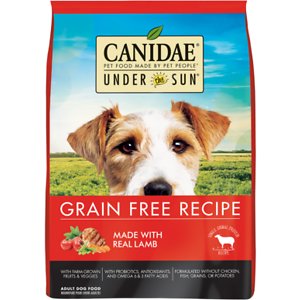
Your dog deserves everything under the sun, so why not start with Under the Sun Grain-Free Lamb Recipe Adult Dry Dog Food? This grain-free canine kibble is made with real ingredients including peas, carrots, pumpkin, blueberries, apples, plus a single animal protein sourced from lamb! Best of all, it’s made without by-product meal, potato, corn, wheat or soy and fortified with all the essential vitamins and minerals your adult dog needs to stay happy and healthy.
Price Score: 61 out of 100 Points
Variety Score: 100 out of 100 Points
Brand Score: 81 out of 100 Points
Ingredients Score: 62 out of 100 Points
Total Score: 76.8 out of 100 Points
Key Benefits
- This wholesome recipe is specially formulated for adult dogs and features a single animal protein from real lamb.
- Grain-free recipe is formulated without chicken, fish, potatoes, corn, wheat, soy or by-product meal.
- Crafted with fruits and vegetables including peas, carrots, pumpkin, blueberries, apples and more.
- Fortified with probiotics, antioxidants, and omega 6 & 3 fatty acids so your furry best friend can thrive.
- Proudly made in the USA by a family-owned company—Under the Sun owns a farm and factory where they grow and cook their very own ingredients.
Ingredients
Lamb Meal, Green Peas, Chickpeas, Yellow Peas, Canola Oil, Suncured Alfalfa, Lamb, Flaxseed, Natural Flavor, Minerals (Iron Proteinate, Zinc Proteinate, Copper Proteinate, Ferrous Sulfate, Zinc Sulfate, Copper Sulfate, Potassium Iodide, Manganese Proteinate, Manganous Oxide, Manganese Sulfate, Sodium Selenite), Vitamins (Vitamin E Supplement, Thiamine Mononitrate, Ascorbic Acid, Vitamin A Supplement, Biotin, Niacin, Calcium Pantothenate, Pyridoxine Hydrochloride, Vitamin B12 Supplement, Riboflavin, Vitamin D3 Supplement, Folic Acid), Choline Chloride, Mixed Tocopherols (a Preservative), Parsley, Pumpkin, Sage, Green Beans, Carrots, Cinnamon, Rosemary, Butternut Squash, Blueberries, Zucchini, Tomatoes, Apples. Caloric Content 3,280 kcal/kg, 357 kcal/cupSee products with the same ingredients:
-
Ascorbic Acid - Harmless ingredient
(50)
Vitamin C, also known as ascorbic acid and ascorbate, is a vitamin found in various foods and sold as a dietary supplement. It is used to prevent and treat scurvy. Vitamin C is an essential nutrient involved in the repair of tissue and the enzymatic production of certain neurotransmitters.
-
Biotin - Harmless ingredient
(242)
Biotin also called vitamin H, vitamin B7 or vitamin B8 is a water-soluble B vitamin. It is involved in a wide range of metabolic processes, both in humans and in other organisms, primarily related to the utilization of fats, carbohydrates, and amino acids.
-
Blueberries (34)
Blueberries are perennial flowering plants with blue or purple–colored berries. They are classified in the section Cyanococcus within the genus Vaccinium. Vaccinium also includes cranberries, bilberries, huckleberries and Madeira blueberries. Commercial "blueberries" – including both wild and cultivated blueberries – are all native to North America.
-
Butternut Squash (4)
Butternut squash, sometimes known in Australia and New Zealand as butternut pumpkin or gramma, is a type of winter squash that grows on a vine. It has a sweet, nutty taste similar to that of a pumpkin. It has tan-yellow skin and orange fleshy pulp with a compartment of seeds in the blossom end.
-
Calcium Pantothenate - Controversial ingredient
(135)
-
Canola Oil (18)
Canola oil is a vegetable oil derived from a variety of rapeseed that is low in erucic acid, as opposed to colza oil. There are both edible and industrial forms produced from the seed of any of several cultivars of the plant family Brassicaceae, namely cultivars of Brassica napus L., Brassica rapa subsp.
-
Carrots - Healthy ingredient
(70)
The carrot (Daucus carota subsp. sativus) is a root vegetable, usually orange in colour, though purple, black, red, white, and yellow cultivars exist. They are a domesticated form of the wild carrot, Daucus carota, native to Europe and Southwestern Asia. The plant probably originated in Persia and was originally cultivated for its leaves and seeds.
-
Chickpeas - Controversial ingredient
(37)
The chickpea or chick pea is an annual legume of the family Fabaceae, subfamily Faboideae. Its different types are variously known as gram or Bengal gram, garbanzo or garbanzo bean, Egyptian pea, chana, and chole. Chickpea seeds are high in protein.
-
Choline Chloride - Harmless ingredient
(236)
Choline chloride is an organic compound with the formula 3NCH2CH2OH]Cl. It is bifunctional, containing both quaternary ammonium salt and an alcohol. The cation is choline, which occurs naturally. It is a white, water-soluble salt used mainly in animal feed..
-
Cinnamon (8)
Cinnamon is a spice obtained from the inner bark of several tree species from the genus Cinnamomum. Cinnamon is used mainly as an aromatic condiment and flavouring additive in a wide variety of cuisines, sweet and savoury dishes, breakfast cereals, snackfoods, tea and traditional foods.
-
Copper Proteinate - Controversial ingredient
(89)
-
Copper Sulfate - Harmless ingredient
(159)
Copper sulfate, also known as copper sulphate, are the inorganic compounds with the chemical formula CuSO4x, where x can range from 0 to 5. The pentahydrate is the most common form. Older names for this compound include blue vitriol, bluestone, vitriol of copper, and Roman vitriol.
-
Ferrous Sulfate - Harmless ingredient
(166)
Iron sulfate sulphate) or ferrous sulfate denotes a range of salts with the formula FeSO4·xH2O. These compounds exist most commonly as the heptahydrate but are known for several values of x. The hydrated form is used medically to treat iron deficiency, and also for industrial applications.
-
Flaxseed - Healthy ingredient
(47)
Flax, also known as common flax or linseed, is a member of the genus Linum in the family Linaceae. It is a food and fiber crop cultivated in cooler regions of the world. Textiles made from flax are known in the Western countries as linen, and traditionally used for bed sheets, underclothes, and table linen.
-
Folic Acid - Harmless ingredient
(235)
Folate, also known as vitamin B9 and folacin, is one of the B vitamins. Manufactured folic acid, which is converted into folate by the body, is used as a dietary supplement and in food fortification as it is more stable during processing and storage.
-
Green Beans (11)
-
Green Peas (6)
-
Iron Proteinate - Controversial ingredient
(68)
-
Lamb (19)
Lamb or The Lamb may refer to: A young sheep Lamb and mutton, the meat of sheep.
-
Lamb Meal (9)
-
Manganese Proteinate - Controversial ingredient
(78)
-
Manganese Sulfate - Controversial ingredient
(138)
-
Manganous Oxide - Low-quality ingredient
(49)
-
Mixed Tocopherols - Low-quality ingredient
(83)
-
Natural Flavor - Controversial ingredient
(106)
-
Niacin - Harmless ingredient
(238)
Niacin, also known as nicotinic acid, is an organic compound and a form of vitamin B3, an essential human nutrient. It has the formula C 6H 5NO 2 and belongs to the group of the pyridinecarboxylic acid. Niacin is obtained in the diet from a variety of whole and processed foods, with highest contents in fortified packaged foods, tuna, salmon, some vegetable and other animal sources.
-
Parsley (20)
Parsley or garden parsley is a species of flowering plant in the family Apiaceae that is native to the central Mediterranean region, but has naturalized elsewhere in Europe, and is widely cultivated as a herb, and a vegetable. Where it grows as a biennial, in the first year, it forms a rosette of tripinnate leaves, 10–25 cm long, with numerous 1–3 cm leaflets and a taproot used as a food store over the winter.
-
Potassium Iodide - Harmless ingredient
(85)
Potassium iodide is a chemical compound, medication, and dietary supplement. As a medication it is used to treat hyperthyroidism, in radiation emergencies, and to protect the thyroid gland when certain types of radiopharmaceuticals are used. In the developing world it is also used to treat skin sporotrichosis and phycomycosis.
-
Pumpkin (23)
A pumpkin is a cultivar of winter squash that is round with smooth, slightly ribbed skin, and most often deep yellow to orange in coloration. The thick shell contains the seeds and pulp. The name is most commonly used for cultivars of Cucurbita pepo, but some cultivars of Cucurbita maxima, C.
-
Pyridoxine Hydrochloride - Harmless ingredient
(238)
-
Riboflavin - Harmless ingredient
(244)
Riboflavin, also known as vitamin B2, is a vitamin found in food and used as a dietary supplement. Food sources include eggs, green vegetables, milk and other dairy product, meat, mushrooms, and almonds. Some countries require its addition to grains. As a supplement it is used to prevent and treat riboflavin deficiency and prevent migraines.
-
Rosemary (10)
Salvia rosmarinus, commonly known as rosemary, is a woody, perennial herb with fragrant, evergreen, needle-like leaves and white, pink, purple, or blue flowers, native to the Mediterranean region. Until 2017, it was known by the scientific name Rosmarinus officinalis, now a synonym.
-
Sage (7)
Sage or SAGE may refer to:.
-
Sodium Selenite - Harmful ingredient
(166)
-
Suncured Alfalfa (3)
-
Thiamine Mononitrate - Harmless ingredient
(256)
-
Tomatoes (3)
The tomato is the edible, often red, berry of the plant Solanum lycopersicum, commonly known as a tomato plant. The species originated in western South America and Central America. The Nahuatl word tomatl gave rise to the Spanish word tomate, from which the English word tomato derived.
-
Vitamin A - Harmless ingredient
(215)
Vitamin A is a group of unsaturated nutritional organic compounds that includes retinol, retinal, retinoic acid, and several provitamin A carotenoids. Vitamin A has multiple functions: it is important for growth and development, for the maintenance of the immune system, and for good vision.
-
Vitamin B12 - Harmless ingredient
(257)
Vitamin B12, also known as cobalamin, is a water-soluble vitamin involved in the metabolism of every cell of the human body: it is a cofactor in DNA synthesis, and in both fatty acid and amino acid metabolism. It is particularly important in the normal functioning of the nervous system via its role in the synthesis of myelin, and in the maturation of developing red blood cells in the bone marrow.
-
Vitamin D3 - Harmless ingredient
(244)
Cholecalciferol, also known as vitamin D3 and colecalciferol, is a type of vitamin D which is made by the skin when exposed to sunlight; it is also found in some foods and can be taken as a dietary supplement. It is used to treat and prevent vitamin D deficiency and associated diseases, including rickets.
-
Vitamin E - Harmless ingredient
(283)
Vitamin E is a group of eight fat soluble compounds that include four tocopherols and four tocotrienols. Vitamin E deficiency, which is rare and usually due to an underlying problem with digesting dietary fat rather than from a diet low in vitamin E, can cause nerve problems.
-
Yellow Peas (5)
-
Zinc Proteinate - Controversial ingredient
(79)
-
Zinc Sulfate - Low-quality ingredient
(132)
Zinc sulfate is an inorganic compound and dietary supplement. As a supplement it is used to treat zinc deficiency and to prevent the condition in those at high risk. Side effects of excess supplementation may include abdominal pain, vomiting, headache, and tiredness.
-
Zucchini (3)
The zucchini or courgette is a summer squash, of Mesoamerican origin, which can reach nearly 1 m in length, but is usually harvested when still immature at about 15 to 25 cm. A zucchini is a thin-skinned cultivar of what in Britain and Ireland is referred to as a marrow.
Guaranteed Analysis
| Crude Protein | 25.00% min |
|---|---|
| Crude Fat | 11.00% min |
| Crude Fiber | 4.00% max |
| Moisture | 10.00% max |
| Linoleic Acid (omega 6) | 1.80% min |
| Alpha Linolenic Acid (omega 3) | 0.70% min |
| Vitamin E | 50.00 IU/kg min |
| Lactobacillus acidophilus | 100 million CFU/lb min |